How to actually use past papers (most students waste them)
Past papers are the single most useful revision tool you have — and most students use them in the one way that barely helps. Here is how to use them properly.
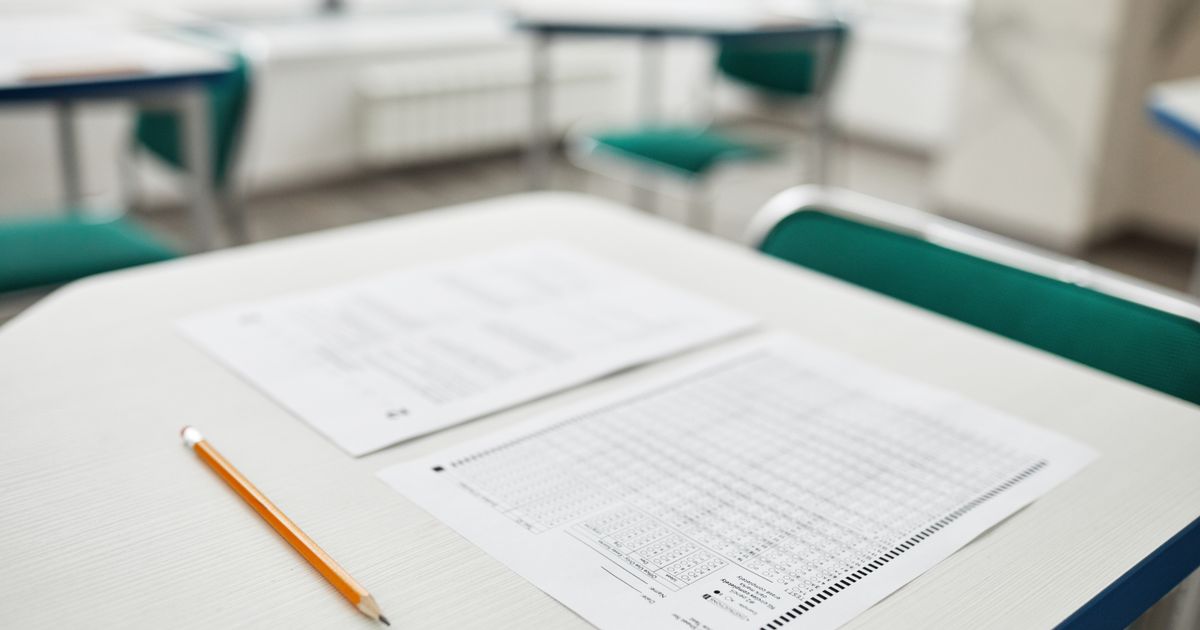
Ask almost any student how they revise and "I do past papers" comes up early. Ask how, and it is usually the same thing: read through a paper, glance at the answers, feel productive, move on. That version of past papers is close to useless. Done properly, past papers are the best predictor of your grade there is — better than re-reading notes, better than highlighting, better than watching one more video. Here is the difference.
Reading a paper is not doing a paper
The whole value of a past paper is that it forces you to retrieve — to pull an answer out of your own head under the same pressure as the exam. Reading the question and then the answer skips exactly the part that builds the skill. Your brain recognises the worked solution and thinks "yes, I knew that", but recognition is not recall. In the exam you get a blank page, not a model answer.
So the first rule is simple and slightly uncomfortable: attempt every question on paper, closed-book, before you look at anything. If you are stuck, sit with it a little longer than feels comfortable. The struggle is the learning.
Mark yourself honestly, against the mark scheme
When you check your work, use the actual mark scheme, not your own judgement of "close enough". Mark schemes are strict on purpose, and they teach you something notes cannot: where the marks actually are. A four-mark physics question is not one idea worth four — it is four separate points, and you lose marks by skipping the one that felt obvious.
Mark in a different colour. Be hard on yourself — if you did not write it, you did not earn it. The gap between "I understood it" and "I wrote what the scheme wanted" is where grades are won and lost.
Topic first, then whole papers
Early in your revision, full papers are inefficient — you hit a topic you have not studied yet and stall. Start topic by topic instead: do every past-paper question on one chapter until it feels routine, then move on. That is exactly what topical practice is for.
We built practice pages for this — every quiz and exam question for a subject, grouped by chapter, with answers and mark schemes: try the O Level Physics practice, the A Level Mathematics practice, or your own board and subject from the Learn page. Once individual topics feel solid, switch to full past papers under timed conditions to build stamina and pacing.
Time yourself, at least sometimes
A question you can answer in ten relaxed minutes is not the same as one you can answer in the three the exam allows. Once a topic is solid, do a few questions against the clock. You will find out fast whether your problem is understanding or speed — and they need completely different fixes. Understanding is fixed by studying; speed is fixed only by doing more, faster.
Redo the ones you got wrong — a week later
The questions you got wrong are worth more than the ones you got right, because they are the ones still teaching you something. Keep them. Redo them a few days later, from scratch, closed-book. If you get it right this time, it has moved from "I have seen it" to "I can do it". If you get it wrong again, that is the single most valuable thing your revision could have told you.
A simple weekly loop
- Pick one topic. Read the notes once, quickly, to refresh it.
- Do every practice question on that topic, closed-book, on paper.
- Mark honestly against the scheme. Write one line per dropped mark.
- Redo anything you got wrong, later in the week.
- When several topics are solid, do a full past paper, timed.
It is not glamorous and it is not new. It is just the method that works, done honestly instead of comfortably. Start with one topic today — pick your subject here — and do the questions with the answers covered. That is the whole secret.